
Working with Scope IDs
How to find scope IDs to use with Central API
A scope ID in Central is an identifier used to manage the constructs in the Central Hierarchy. Each piece of the hierarchy has it's own unique scope ID. Understanding how to retrieve and use scope IDs is essential to working with Central APIs. In order to apply any configuration in Central via API it is required to know the scope ID of the target hierarchy construct. This guide is a walkthrough on how to retrieve a scope ID from each level of the Central hierarchy to enable configuration application via API.
Executing the APIs
To run all of the scope ID APIs we only need an access token. Please review our Generating & Managing Access Tokens guide for how to get an access token. For a refresher on how to make API calls please reference our Making API calls guide.
Site Collection ID
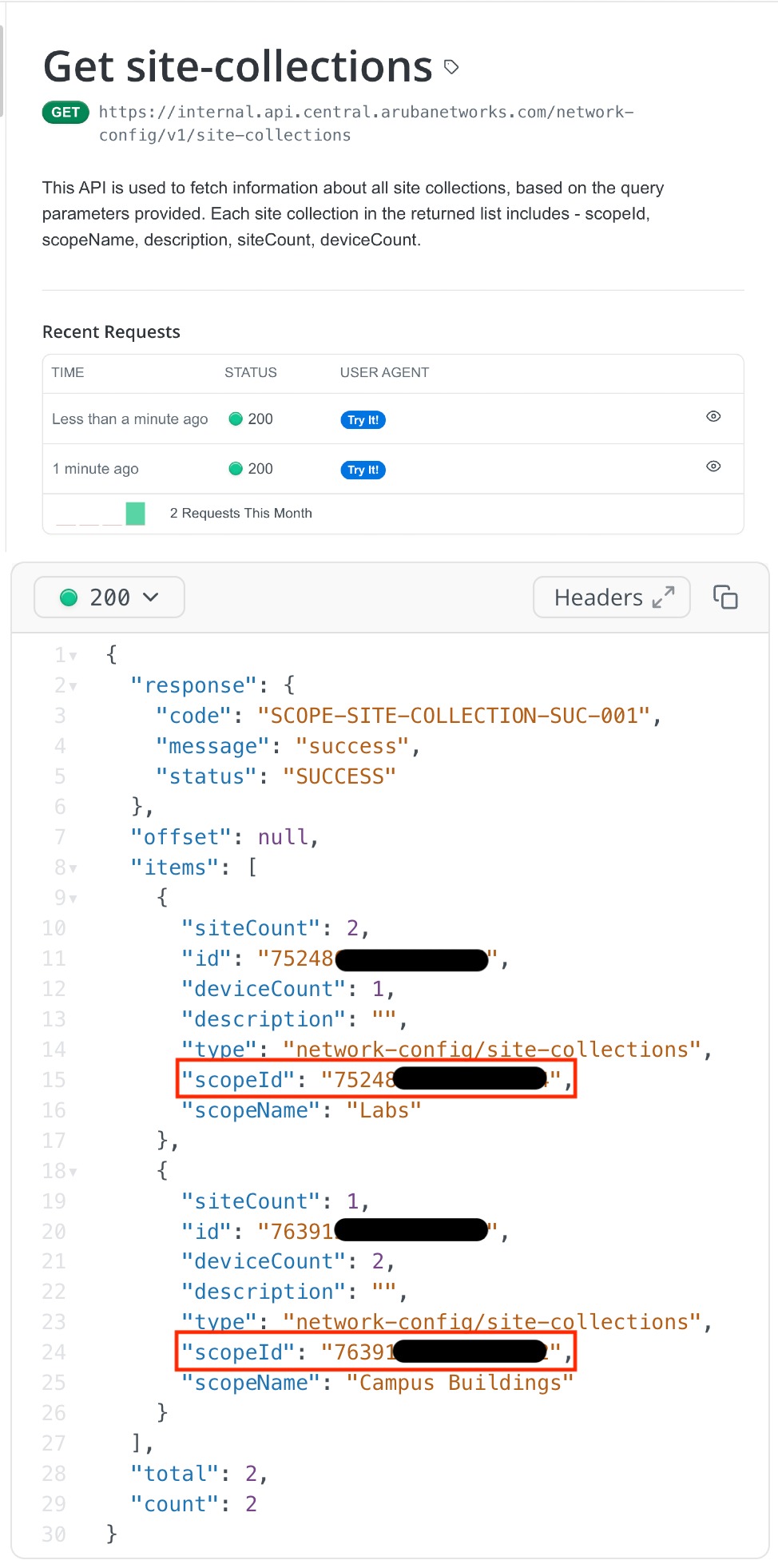
To retrieve a site collection scope ID use the get site collection network-config API. This API will return a list of all site collection details including the scope ID. We can identify the target collection with the scopeName key and the ID with the scopeID key. Here is a sample return of the API executed from the reference page.
Site Collection Example
Site ID
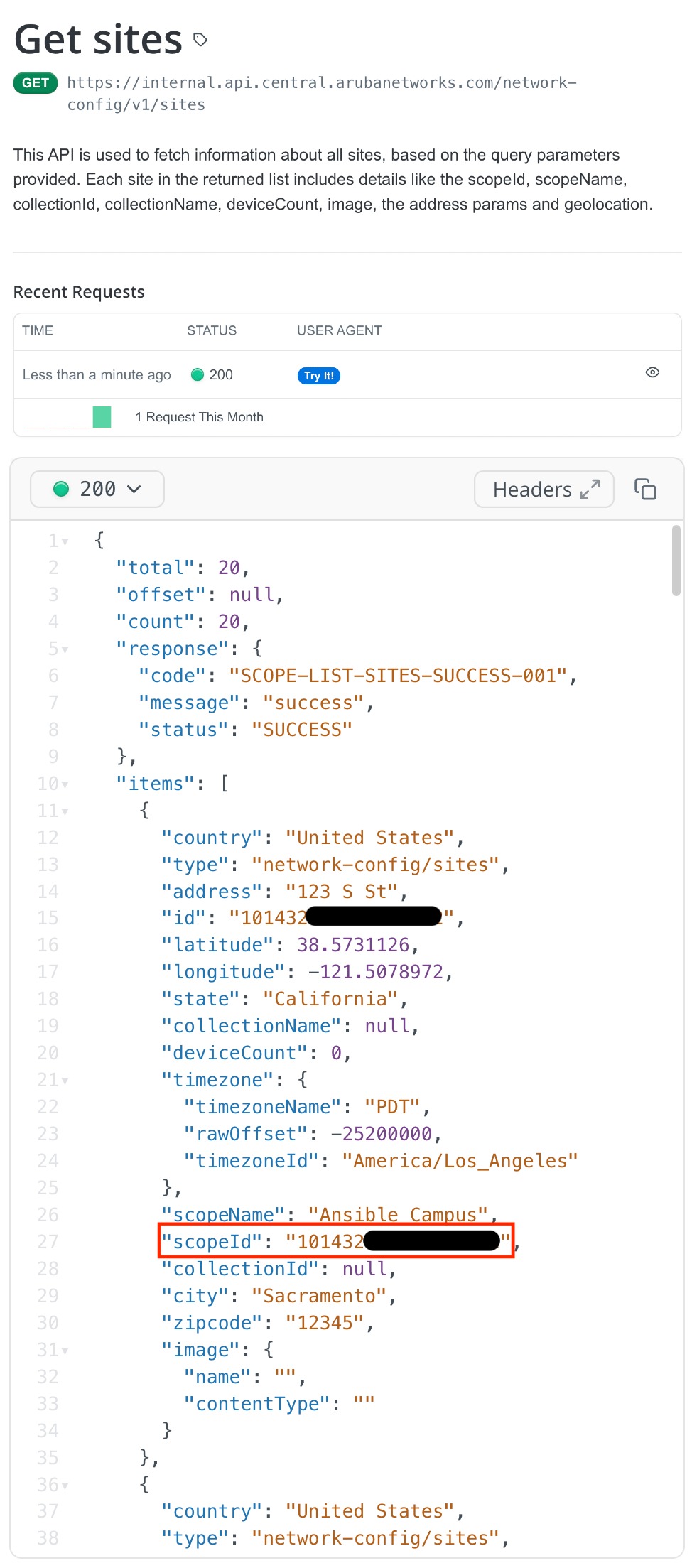
To retrieve a site scope ID use the get sites network-config API. This API will return a list with details of all sites including the scope ID. We can identify the target site with the scopeName key and the ID with the scopeID key. Here is a sample return of the API executed from the reference page.
Site Example
Device ID
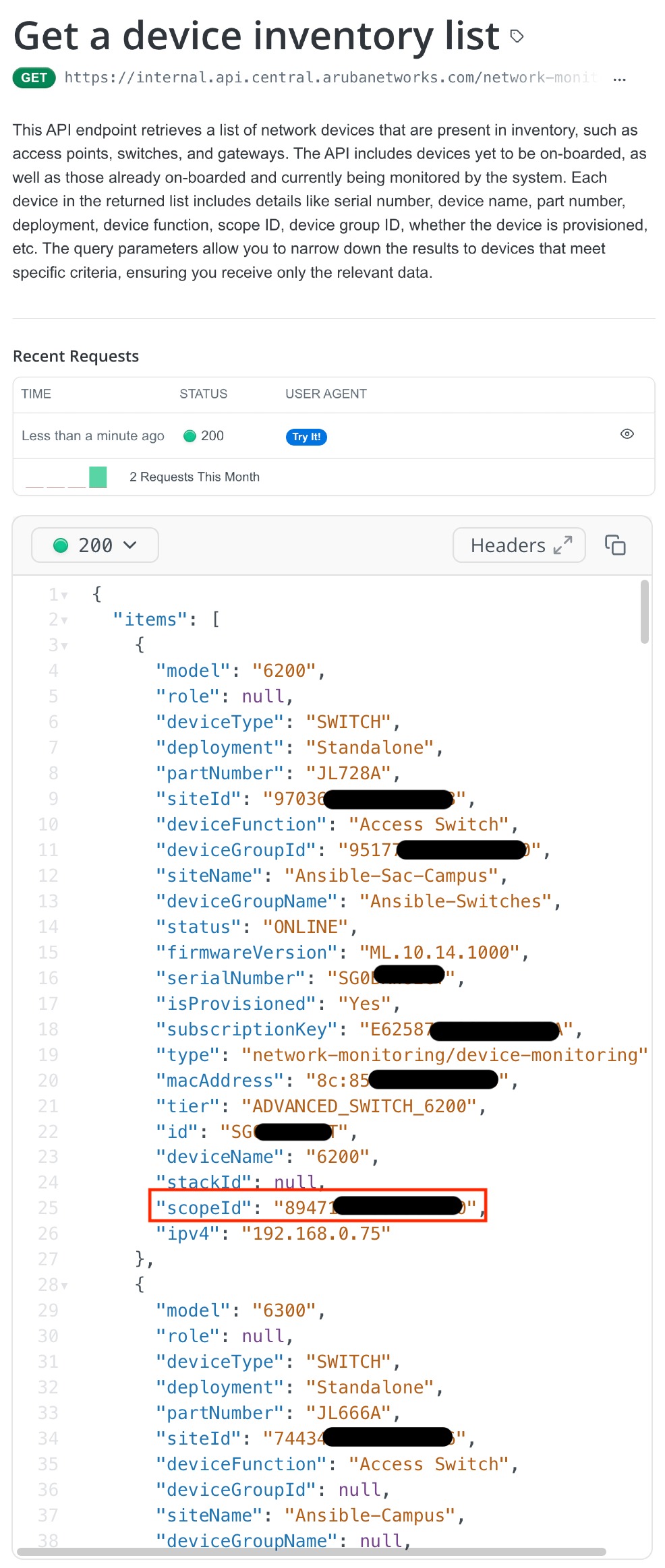
To retrieve a device scope ID use the device inventory monitoring API. This API will return a list of device details for all devices in inventory(onboarded or not) including the scope ID. We can identify the target device with the deviceName or serialNumber key and the ID with the scopeID key. Here is a sample return of the API executed from the reference page.
Device Example
Global ID
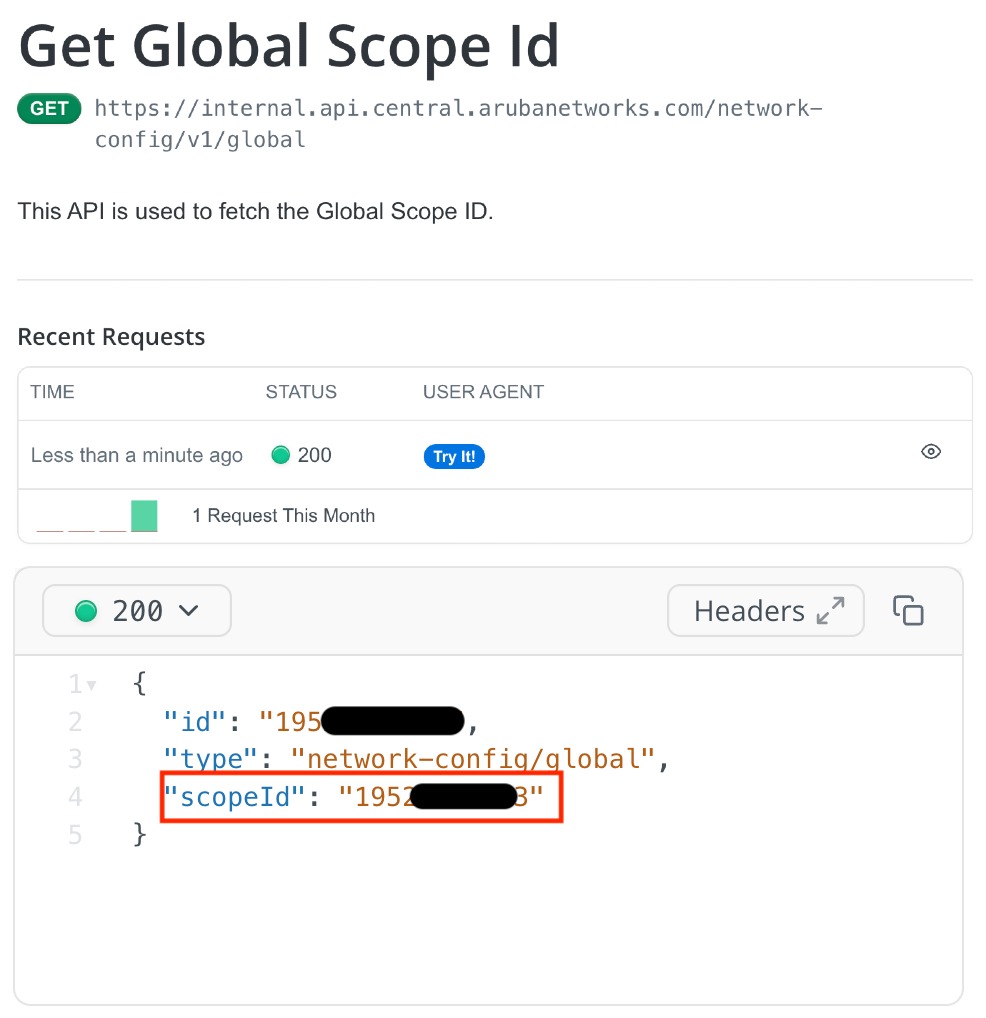
To retrieve the global scope ID, use the Get Global Scope ID API. The API response includes the global scope ID in the scopeId field. Use this value in APIs that require the global scope.
Global Example
Using Scope ID with APIs
With a scope ID in hand we can now use them in our other API calls to perform operations such as creating a local profile or assigning a library profile to a scope. These operations allow applying configuration profiles through profile assignment or local profile creation at any scope level of the hierarchy.
Updated 4 months ago
What’s Next
Learn how to put it all together by working with Library Profiles