
Getting Started with MCP Servers
What is an MCP Server?
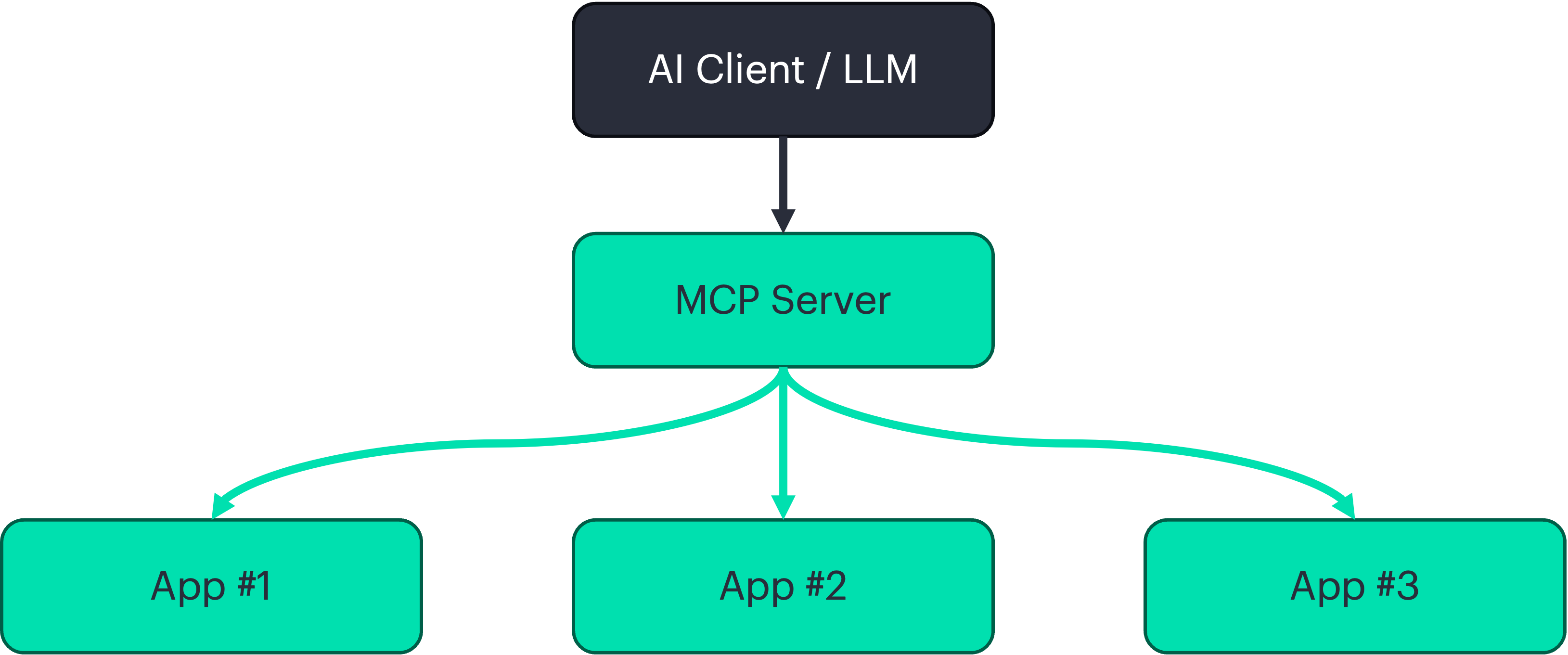
MCP stands for Model Context Protocol, an open standard developed by Anthropic that defines how AI models communicate with external tools, data sources, and services in a standardized way. At its core, an MCP server is a lightweight process that exposes capabilities over a well-defined protocol to an AI client, such as a coding assistant or chat agent. It can be thought of as a plugin host that allows AI models to reach outside their context window and interact with the real world.
Core Concepts
MCP servers expose three types of capabilities: tools, resources, and prompts.
- Tools are functions that the AI can call, such as searching the web, querying a database, or running code.
- Resources are data sources the AI can read, like files, documents, or API responses.
- Prompts are reusable templates that the server makes available to the AI client.
How It Works
When an AI client connects to an MCP server, it first discovers what tools and resources the server provides. When the AI decides it needs to use one of those tools, it sends a request to the MCP server using JSON-RPC over a transport like stdio, SSE, or HTTP. The server then executes the action and returns the result back to the AI, which can incorporate that result into its response.
Why It Matters
The primary value of MCP is standardization. Because there is one common protocol, the same MCP server can work across different AI models and clients without any special integration work. It is also highly extensible. Anyone can write an MCP server to expose any capability they need. There is also an important security benefit: because the server runs as a separate process, the AI never gets direct access to your system. The MCP server acts as an abstraction layer through which interactions occur in a controlled, well-defined interface.
AI Tool Usage ComplianceWhen using AI-assisted tools on your network, ensure you are following your organization's IT policies and security standards. This includes how data is shared with AI systems, how API credentials are stored and used, and what network information may be exposed. When in doubt, consult your IT or security team before proceeding.
Updated 4 months ago